What Movers Will Not Move: Non-Allowable Items for Interstate Moving

Most people know movers will transport furniture, boxes, appliances, mattresses, and household décor.
The confusing part is everything they will not put on the truck.
A bottle of propane may look harmless sitting next to the grill. A half-full gas can may seem easier to pack than dispose of. Cleaning supplies may already be sealed. Plants may have survived several local moves. And the customer may assume the moving company will simply take all of it.
That assumption can create safety problems, delays, damaged shipments, reduced mover liability, or a last-minute pile of items left on the driveway.
So, what movers will not move during an interstate relocation?
Most interstate movers refuse undeclared hazardous materials, flammable liquids, explosives, compressed gases, leaking chemicals, perishables, live animals, and other items that create legal, safety, contamination, or liability risks. Movers may also exclude plants, medications, valuables, firearms, alcohol, lithium batteries, and specialty items depending on company policy and destination rules.
There is no single identical non-allowable list used by every moving company. Some items are regulated under federal hazardous materials rules. Others are excluded by the mover’s tariff, insurance requirements, or company policy. A third group may be technically transportable but should stay with the customer because losing them would create an immediate personal or financial emergency.
The safest approach is simple: request your mover’s written non-allowable list before packing and disclose anything that might be hazardous, restricted, alive, perishable, valuable, or difficult to replace.
What Movers Will Not Move: The Quick Answer
Interstate movers commonly refuse or restrict:
gasoline and diesel fuel
propane tanks
lighter fluid
fireworks
explosives
paint thinner
many paints and solvents
pesticides
pool chemicals
compressed gas cylinders
oxygen bottles
ammunition and gunpowder
leaking batteries
damaged lithium batteries
perishable food
live animals
some plants and soil
illegal substances
contaminated or pest-infested items
Movers also strongly recommend that customers personally transport:
cash
jewelry
passports
birth certificates
prescription medication
important legal documents
keys
irreplaceable photographs
essential electronics
items needed immediately after arrival
These two groups are different.
A propane cylinder may be prohibited because it creates a transportation hazard. A passport is not hazardous, but putting it on a moving truck is still a bad idea.
“Non-Allowable” Does Not Always Mean the Same Thing
The phrase non-allowable items is used broadly in the moving industry.
It can refer to three different categories.
Legally regulated hazardous materials
These are substances that may be subject to federal hazardous materials classification, packaging, marking, shipping-paper, or carrier requirements.
Federal law does not allow customers to quietly place hazardous materials inside household goods boxes or luggage without informing the mover. If a customer offers hazardous materials for commercial transportation, federal hazardous materials requirements may apply to both the customer and the carrier.
Items excluded by the moving company
A carrier may refuse items that create unacceptable safety, contamination, operational, or liability risks even when those items are not universally prohibited by federal law.
Examples may include:
open food
live plants
alcohol collections
wet outdoor equipment
unusually valuable collections
items with mold or pests
equipment containing batteries or fuel
The exact policy can differ from one mover to another.
Items customers should carry personally
Some belongings should not go on the truck because they are too important to lose access to.
Examples include identification, medication, cash, legal documents, irreplaceable records, and items needed during the delivery window.
These items may not be “prohibited,” but a professional mover will usually recommend keeping them with you.
Hazardous Materials Movers Commonly Refuse
Hazardous materials are the most important category to understand.
FMCSA identifies explosives, compressed gases, flammable liquids and solids, oxidizers, poisons, corrosives, and radioactive materials as hazardous-material categories. Its household-goods guidance gives examples such as nail polish remover, paint, paint thinner, lighter fluid, gasoline, fireworks, oxygen bottles, propane cylinders, automotive chemicals, and certain medical materials.
Common examples in a home or garage
Do not pack these without first discussing them with the mover:
gasoline
diesel fuel
kerosene
lighter fluid
paint thinner
solvents
oil-based paint
propane cylinders
camping fuel
fireworks
pesticides
herbicides
pool chemicals
automotive fluids
oxygen cylinders
compressed-gas containers
corrosive cleaners
Many customers do not think of common garage and household products as hazardous materials.
But a sealed moving truck can become extremely hot, and household goods are packed closely together for long periods. A leaking, flammable, corrosive, or pressurized product can damage an entire shipment and put the crew, driver, truck, and public at risk.
Gasoline, Fuel and Flammable Liquids
Movers generally will not transport equipment that still contains gasoline or other flammable fuel.
This can include:
lawn mowers
generators
pressure washers
snow blowers
leaf blowers
chainsaws
motorcycles
fuel cans
gas-powered tools
Prepare fuel-powered equipment early
Ask your mover how each item must be prepared.
The company may require you to:
drain the fuel
run the engine until the fuel system is empty
remove portable fuel containers
disconnect the battery
allow equipment to cool
clean visible residue
provide proof of professional servicing for certain equipment
Do not drain gasoline on moving day without a safe disposal plan.
Handle the preparation before the crew arrives and follow local disposal rules.
Propane Tanks and Gas Cylinders
A grill may be accepted after proper preparation.
The propane cylinder attached to it usually will not be accepted as ordinary household goods.
The same concern can apply to:
camping cylinders
butane canisters
oxygen bottles
welding cylinders
scuba tanks
carbon dioxide cylinders
fire extinguishers
other pressurized containers
Compressed gases are included among the hazardous-material categories identified in FMCSA’s household-moving guidance.
Do not assume “empty” means acceptable
A cylinder that appears empty may still contain pressure or residue.
Ask the mover whether it must be:
removed
professionally emptied
purged
certified
transported separately
returned to a supplier
Do not hide a cylinder inside a cabinet, grill, box, or garage carton.
Paint, Solvents and Home Improvement Chemicals
Many customers have leftover supplies from painting, renovation, or home maintenance.
Common examples include:
oil-based paint
paint thinner
mineral spirits
varnish
stain
adhesives
epoxy products
aerosol paint
spray adhesives
sealants
certain wood treatments
Some water-based products may be treated differently from flammable or solvent-based products, but mover policies vary.
Check the label and Safety Data Sheet
Look for warnings such as:
flammable
combustible
corrosive
oxidizer
toxic
pressurized
keep away from heat
When in doubt, provide the exact product name and a photo of the label to the mover before packing.
Do not describe an entire group simply as “painting supplies.”
Household Cleaners and Laundry Products
Not every cleaner is prohibited, but many can leak, react with other products, damage furniture, or fall under hazardous-material rules.
Problem items may include:
bleach
ammonia
drain cleaner
oven cleaner
strong acids
strong alkaline cleaners
concentrated disinfectants
aerosol cleaners
solvent-based stain removers
Never pack chemicals that could react with each other.
For example, bleach and ammonia must never be mixed.
Best approach
Use up, donate, or properly dispose of questionable cleaning products before the move.
Replacing a few bottles at the destination is usually cheaper than cleaning contamination from furniture, boxes, and warehouse space.
Pesticides, Fertilizers and Pool Chemicals
Lawn, garden, pest-control, and swimming-pool products are easy to overlook because they are often stored outside the main living area.
These may include:
insecticides
rodent-control products
herbicides
fungicides
pool chlorine
pool shock
acids
oxidizers
concentrated fertilizer products
PHMSA identifies pesticides among materials that may be regulated as hazardous during commercial transportation.
Do not place these products in ordinary moving boxes.
Ask your local household hazardous-waste program how to dispose of them safely.
Fireworks, Explosives and Ammunition
Fireworks, explosives, gunpowder, primers, and similar materials should never be packed secretly in a household goods shipment.
Small-arms-related products can include explosive or otherwise regulated hazardous materials. PHMSA specifically notes that propellants and primers are explosive materials and that some related products may also contain hazardous components.
Firearms and ammunition require disclosure
Federal firearms rules may require written notice to a common or contract carrier when a firearm or ammunition is shipped interstate, depending on the sender, recipient, and type of shipment. Carrier policies may be stricter, and not every household mover accepts these items.
Before moving any firearm-related item:
ask whether the carrier accepts it
disclose it in writing
confirm all origin and destination laws
request written preparation instructions
never leave a firearm loaded
never conceal ammunition in a household box
do not mix firearms with other household goods without approval
The mover’s acceptance of a firearm does not automatically mean the mover accepts ammunition, powder, primers, or reloading supplies.
Treat each category separately.
Lithium Batteries and Battery-Powered Devices
Lithium batteries require special attention.
PHMSA classifies lithium batteries as hazardous materials for transportation because they can overheat, short-circuit, ignite, or create chemical and electrical hazards under certain conditions.
This does not mean every device containing a lithium battery is automatically rejected by every mover.
It means you should not assume acceptance.
Items to discuss with the mover
Tell the company if you have:
e-bikes
electric scooters
hoverboards
power stations
battery backup systems
large power-tool batteries
mobility devices
lawn equipment with lithium batteries
loose spare batteries
damaged or recalled batteries
Damaged batteries are a serious red flag
Do not pack a battery that is:
swollen
punctured
leaking
overheating
recalled
water-damaged
producing an odor
showing burn marks
Provide the device model, battery type, watt-hour rating when available, and current condition to the mover.
A carrier may require battery removal, separate handling, or complete exclusion.
Car Batteries and Other Wet-Cell Batteries
Traditional vehicle, marine, and equipment batteries may contain corrosive liquid and create leakage or short-circuit risks.
Ask the mover about:
car batteries
motorcycle batteries
boat batteries
lawn-equipment batteries
backup-power batteries
uninterruptible power supplies
Do not place a loose battery in a normal cardboard box.
The mover may require removal, terminal protection, specialty packaging, or separate transportation.
Aerosol Cans and Pressurized Products
Aerosols may contain flammable propellants and are pressurized.
Examples include:
spray paint
hairspray
cooking spray
insect spray
air freshener
spray lubricant
aerosol cleaner
expanding foam
compressed-air products
Some products may qualify for limited exceptions under hazardous-material rules, but a household mover can still prohibit them under company policy.
Do not assume a small can is automatically safe to place inside a sealed truck.
Ask first.
Perishable Food
Most movers will not transport food that can spoil, leak, attract pests, or create odors.
Common examples include:
refrigerated food
frozen food
open containers
fresh produce
meat
dairy products
prepared meals
opened pantry products
food stored in weak packaging
FMCSA warns that packing perishable, dangerous, or hazardous materials without the mover’s knowledge may limit or reduce the mover’s normal liability.
What food may be accepted?
Some movers may accept:
unopened canned food
factory-sealed dry goods
sealed spices
unopened shelf-stable products
But policies vary, especially when storage is involved.
A shipment going directly from pickup to delivery is different from one that may sit in storage-in-transit.
Ask the carrier before packing any food.
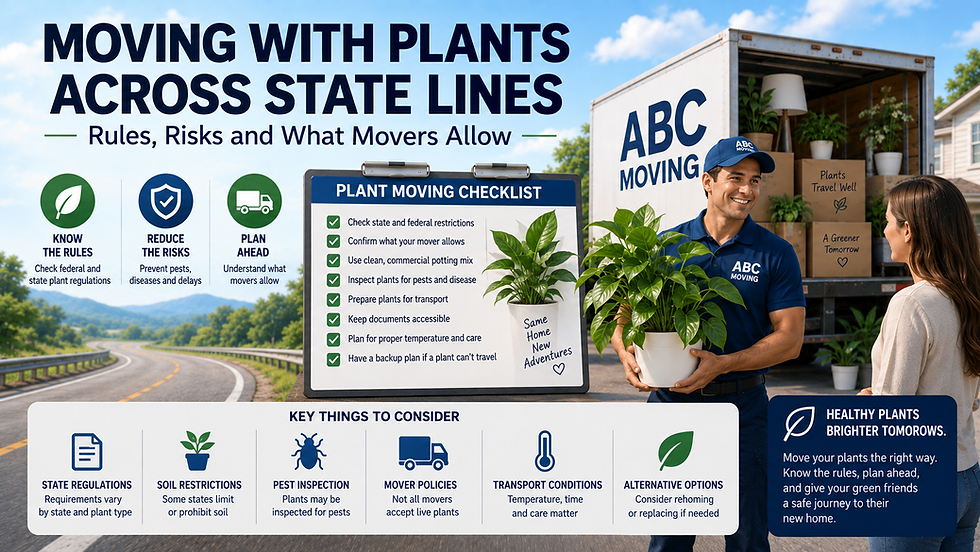
Plants and Soil
Plants are not always treated like ordinary household goods.
A mover may refuse them because they are fragile, temperature-sensitive, prone to leaking soil or water, or restricted by state agricultural rules.
USDA APHIS warns that moving plants or soil can spread pests and diseases, even when the plants appear healthy. APHIS recommends checking plants for insects and disease and considering rehoming them before a long-distance move.
APHIS also restricts interstate movement of soil from certain quarantined areas when the soil could carry regulated pests or diseases.
Before moving plants
Check:
destination-state restrictions
origin-area quarantines
soil restrictions
mover policy
temperature conditions
expected delivery window
storage possibility
A plant may survive a short personal drive but not several days inside a moving trailer or warehouse.
Pets and Other Live Animals
Standard household-goods movers do not transport pets inside the moving truck.
This includes:
dogs
cats
birds
reptiles
fish
rodents
insects
farm animals
Live animals need appropriate ventilation, temperature control, food, water, supervision, and species-specific care.
Arrange personal transportation, veterinary-approved travel, or a qualified animal-transport service.
Prepare a pet travel kit
Keep with you:
food
water
medication
veterinary records
identification
carrier or crate
leash
cleaning supplies
comfort items
several days of essentials
Never place a live animal inside a box, cabinet, storage container, or moving trailer.
Prescription Medication and Medical Supplies
Medication is not automatically a prohibited household good, but it should usually stay with the customer.
Keep personally controlled:
prescription medication
temperature-sensitive medicine
insulin
emergency medication
medical records
essential mobility aids
daily medical supplies
devices needed during travel
A moving truck may be delayed, rerouted, stored, or exposed to temperatures that are unsuitable for medication.
Medical oxygen is different
Oxygen cylinders and similar pressurized medical containers may be regulated hazardous materials and commonly require separate arrangements. FMCSA includes oxygen bottles among its hazardous-material examples.
Discuss them with the mover and medical supplier well before pickup.
Cash, Jewelry and Financial Items
Cash and jewelry are not hazardous, but they should not go on the moving truck.
Keep with you:
cash
jewelry
precious metals
collectible coins
checkbooks
credit cards
financial records
small high-value items
Even strong valuation coverage may not work the way customers expect for unusually valuable or poorly documented property.
Do not place expensive items inside boxes labeled only as “bedroom” or “miscellaneous.”
Passports, Legal Documents and Personal Records
Important records should travel with you.
Keep personal possession of:
passports
birth certificates
Social Security cards
immigration records
property deeds
vehicle titles
insurance policies
wills
tax documents
court documents
school records
medical records
employment documents
If your shipment is delayed, you may need these documents immediately.
Store physical copies securely and keep encrypted digital backups where appropriate.
Keys and Access Devices
Do not pack keys that you may need before delivery.
Keep:
house keys
vehicle keys
storage-unit keys
safe keys
mailbox keys
building fobs
gate remotes
alarm devices
A key packed into a box may be unavailable for days or weeks.
Label spare keys privately, not with a full address.
Irreplaceable and Sentimental Items
Some items have little resale value but enormous personal value.
Examples include:
family photographs
handwritten letters
childhood keepsakes
original recordings
family heirlooms
cremated remains
irreplaceable artwork
one-of-a-kind documents
A claims payment cannot replace these items.
Carry them personally whenever practical.
If an item is too large to carry, discuss specialty packing, high-value documentation, and valuation options before pickup.
Articles of Extraordinary Value
High-value items may be accepted, but they need special attention.
FMCSA warns that failing to notify the mover in writing about articles valued at more than $100 per pound may limit the mover’s liability.
Examples may include:
fine art
antiques
rare collectibles
designer items
valuable rugs
silverware
high-end electronics
rare instruments
valuable china
Do not hide valuable items in ordinary boxes
Before pickup:
declare the item in writing
provide photos
keep receipts or appraisals
confirm valuation coverage
request professional packing if appropriate
verify the inventory description
ask whether a high-value inventory form is required
A valuable item is not necessarily non-allowable.
But it should never be treated like an unidentified household box.
Alcohol, Wine and Collectible Bottles
Mover policies for alcohol vary.
Some companies may accept properly packed, unopened bottles. Others may refuse alcohol because of leakage, breakage, temperature, licensing, storage, or interstate-law concerns.
A valuable wine collection may require a specialty service with climate control and detailed inventory.
Ask before packing alcohol
Confirm:
whether the carrier accepts it
whether storage is possible
whether temperature control is needed
whether professional packing is required
whether state restrictions apply
whether valuation covers breakage or spoilage
Do not place open containers or unlabeled liquids in a household shipment.
Illegal or Controlled Items
Movers will not knowingly transport illegal property.
This includes items prohibited under applicable federal, state, or local law.
Do not ask the crew to transport or conceal illegal drugs, stolen goods, illegal weapons, contraband, or unlawfully possessed materials.
The fact that an item fits in a box does not make it acceptable household goods.
Wet, Moldy, Infested or Contaminated Items
A mover may refuse items that could contaminate the truck, warehouse, crew equipment, or other customers’ shipments.
Examples include:
furniture with active mold
wet mattresses
items with bedbugs
rodent-infested boxes
containers with strong chemical residue
sewage-contaminated belongings
items exposed to biohazards
Resolve the problem before pickup
You may need:
professional cleaning
pest treatment
mold remediation
drying
safe disposal
written clearance for some items
Do not conceal an infestation or contamination problem.
That can put other households’ property at risk.
Outdoor Furniture, Grills and Garden Equipment
Outdoor items may be accepted after preparation.
Before moving them:
remove propane tanks
empty fuel
remove loose soil
clean insects and egg masses
dry wet surfaces
remove charcoal
disconnect batteries when instructed
clean grease from grills
secure sharp components
USDA advises cleaning outdoor items because invasive pests and egg masses can travel on patio furniture and other outdoor belongings.
Ask the mover whether each piece needs disassembly or special preparation.
Candles, Wax Products and Heat-Sensitive Items
Candles are not the same as gasoline or propane, but they can melt in a hot moving truck and damage nearby boxes.
Other heat-sensitive items may include:
wax décor
certain cosmetics
vinyl records
temperature-sensitive art supplies
some electronics
specialty foods
Ask whether the mover recommends personal transport or climate-controlled service.
A normal moving trailer is not a climate-controlled environment unless the contract specifically says otherwise.
Items the Mover Does Not Know About
One of the biggest risks is not the category itself.
It is the fact that the item was hidden.
FMCSA states that placing perishable, dangerous, or hazardous materials in household goods without the mover’s knowledge can reduce the mover’s normal liability.
Never hide questionable items
Do not conceal them inside:
kitchen boxes
toolboxes
garage cabinets
coolers
appliances
grills
plastic storage bins
drawers
locked containers
If you are unsure, send the mover a photo and ask in writing.
A written answer is better than a moving-day argument.
How to Read Your Mover’s Non-Allowable List
Ask for the mover’s written policy before packing.
Do not rely only on a salesperson saying:
“Just don’t pack anything dangerous.”
That is too vague.
Check for these categories
The list should address:
flammable products
compressed gases
explosives
chemicals
batteries
food
plants
animals
medication
firearms and ammunition
alcohol
valuables
contaminated goods
outdoor equipment
Ask follow-up questions
Ask:
Is this item prohibited or only restricted?
Can it be accepted after preparation?
Does it need professional servicing?
Must the battery be removed?
Must the fuel system be drained?
Is written disclosure required?
Does storage change the policy?
Does the destination state have restrictions?
Will accepting the item affect valuation coverage?
Keep the answer with your moving documents.
What to Do With Items Movers Will Not Move
Do not leave the problem until pickup day.
Use one of these options:
use the product before moving
donate it
give it to a neighbor
return a cylinder to the supplier
use a local hazardous-waste program
recycle it properly
arrange specialty transportation
transport an approved item personally
rehome plants
replace inexpensive products after arrival
Never dump chemicals, fuel, paint, or pesticides into drains, soil, or household trash unless local rules specifically allow it.
Plan disposal or alternative transportation in advance.
What Happens If Movers Find a Prohibited Item on Moving Day?
The crew may:
refuse the item
stop loading the affected box
ask you to remove it
require the carton to be opened
delay pickup
document the issue
refuse part of the shipment
refuse the entire shipment if the risk is serious
require revised service arrangements
A moving company should not be expected to transport a dangerous item simply because the customer already packed it.
Do not pressure the crew
If the driver says an item cannot be loaded, ask:
What policy applies?
Can the item be made safe?
Can it be transported separately?
Can you provide the reason in writing?
Does removing it change the estimate or inventory?
Then solve the issue safely.
Can Prohibited Items Affect a Damage Claim?
Yes.
If a hidden chemical leaks and damages your furniture, the mover may argue that the customer caused the loss.
FMCSA specifically warns that packing perishable, dangerous, or hazardous materials without the mover’s knowledge may limit mover liability.
Example
A customer packs an undisclosed cleaning chemical inside a kitchen carton.
The bottle leaks during transit and damages:
the carton
nearby furniture
another customer’s shipment
warehouse flooring
The problem is no longer just one broken bottle.
That is why full disclosure matters.
When customers pack their own boxes, movers usually cannot verify every item or substance placed inside them. If an undisclosed chemical, liquid, battery, or other non-allowable item causes damage, the Packed by Owner designation can make responsibility and the claims process more complicated. To understand how owner-packed cartons affect proof, valuation, and mover liability, read:
Packing-Day Room-by-Room Check
Before sealing the final boxes, inspect the areas where non-allowable items are commonly forgotten.
Garage
Check for:
fuel
propane
paint
solvents
pesticides
batteries
automotive chemicals
pressurized cans
Kitchen
Check for:
open food
perishables
alcohol
cleaning chemicals
leaking bottles
refrigerated items
Laundry room
Check for:
bleach
strong cleaners
aerosols
leaking detergents
corrosive products
Bathroom
Check for:
nail polish remover
aerosols
medication
temperature-sensitive products
pressurized toiletries
Patio and shed
Check for:
propane tanks
charcoal
fuel cans
fertilizers
pesticides
plants
soil
damp equipment
Office and bedroom
Remove:
passports
cash
jewelry
legal documents
keys
essential electronics
irreplaceable records
This final walkthrough can prevent a major moving-day problem.
Questions to Ask Your Mover Before Packing
Ask the moving company:
What items will you not move under your company policy?
Can you send me the non-allowable list in writing?
Which household chemicals are prohibited?
How should fuel-powered equipment be prepared?
Do you accept lithium-battery devices?
Do batteries need to be removed?
Do you accept unloaded firearms?
Do you accept ammunition?
Do you transport sealed alcohol?
Do you transport plants?
What food can remain in boxes?
Do storage shipments have stricter rules?
Which valuables should stay with me?
What happens if the crew finds a prohibited item?
Can undisclosed items affect mover liability?
A professional mover should give clear answers before pickup.
FAQ About What Movers Will Not Move
What Movers Will Not Move during an interstate relocation?
Movers commonly refuse hazardous, flammable, explosive, corrosive, pressurized, leaking, perishable, illegal, contaminated, and living items. Company policies may also restrict plants, alcohol, batteries, firearms, valuables, and specialty goods.
Will movers transport cleaning supplies?
It depends on the exact product and mover policy. Flammable, corrosive, toxic, reactive, aerosol, or leaking products are commonly refused. Send the mover the product name or label before packing.
Can movers transport a grill?
Movers may transport a properly cleaned grill, but propane cylinders, fuel, charcoal, grease, and other hazardous components may need to be removed.
Will movers take a lawn mower?
A mover may accept a lawn mower after the fuel is drained and the equipment is prepared according to company instructions. Ask whether oil, batteries, or other components must also be removed.
Can movers transport plants across state lines?
Some movers refuse plants, and state agricultural restrictions may apply. USDA warns that plants and soil can spread pests and diseases, so check destination requirements before moving them.
Can movers transport lithium batteries?
Lithium batteries are regulated hazardous materials, and acceptance depends on battery type, condition, size, device, packaging, and carrier policy. Disclose them before packing.
Can I pack medication on the moving truck?
You should generally keep essential and prescription medication with you, especially medication that is temperature-sensitive or needed during the delivery window.
What happens if I hide hazardous materials in a box?
The mover may refuse the item or shipment, and undisclosed hazardous or perishable materials may reduce the mover’s liability if they cause damage. Federal hazardous-material requirements may also apply.
Final Checklist Before the Movers Arrive
Before pickup, confirm that you have removed or separately arranged:
gasoline
propane cylinders
fireworks
paint thinner
flammable paint
pesticides
pool chemicals
compressed gases
leaking chemicals
prohibited batteries
perishable food
live animals
restricted plants and soil
illegal items
contaminated belongings
cash and jewelry
passports and legal documents
prescription medication
keys
irreplaceable items
Also confirm:
fuel-powered equipment is prepared
the mover’s written non-allowable list has been reviewed
questionable products were disclosed
destination restrictions were checked
specialty transportation was arranged where needed
important personal items will travel with you
Understanding what movers will not move protects more than the moving company. It protects your belongings, the crew, the truck, other customers’ shipments, and your ability to file a claim if something goes wrong. Request the mover’s written policy early, disclose questionable items honestly, and remove every prohibited, hazardous, perishable, or irreplaceable item before loading begins.
Related Interstate Moving Guides
Author:
Written by: Arthur Brooks — Owner & Operations Manager Interstate moving, storage & claims operations expert
Just Movers / BY Logistic LLC
Dallas, TX • Miami, FL